1 Designer
1 Founder
Overview
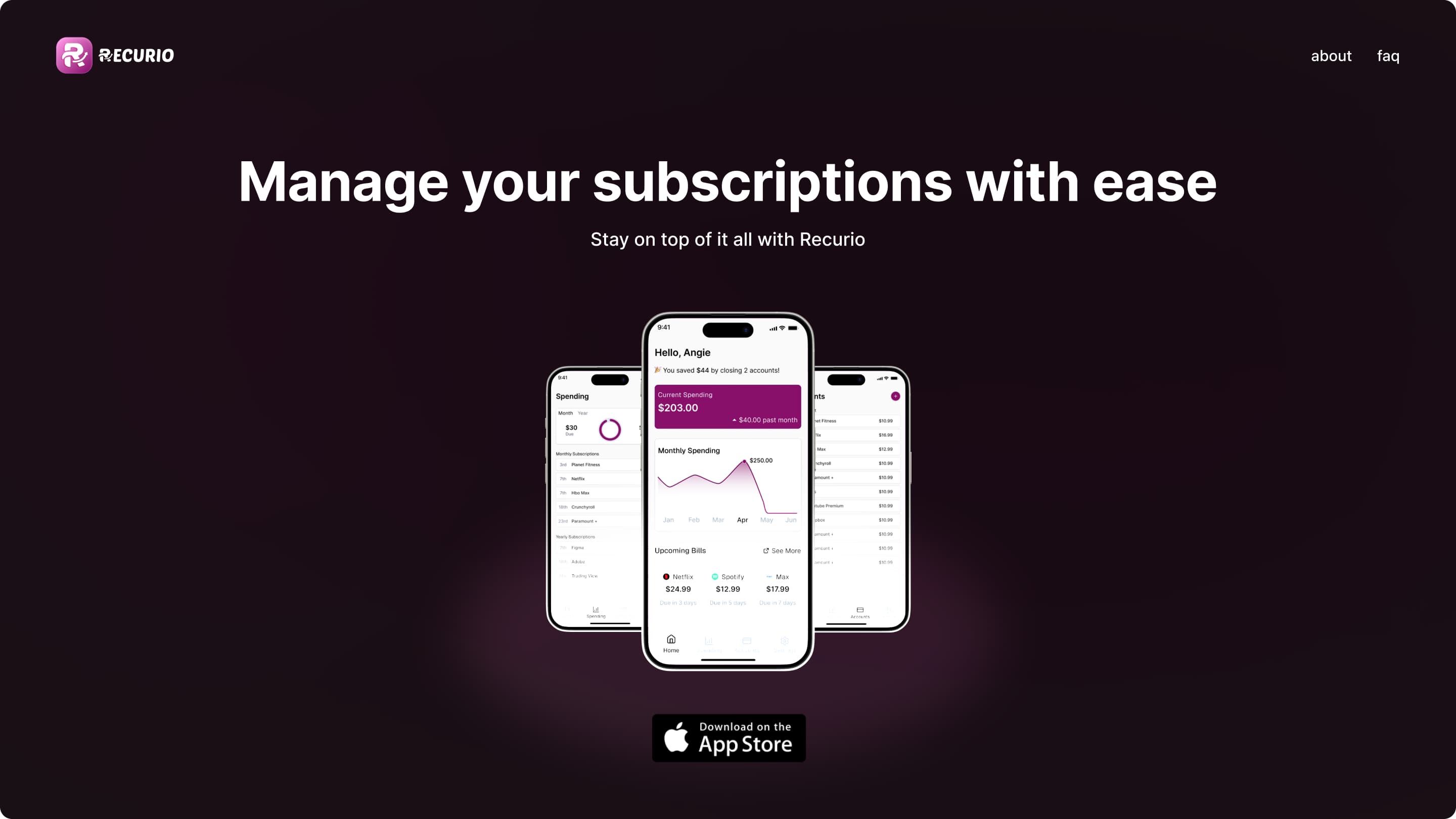
Many people struggle to track recurring payments and understand their cumulative impact on personal finances. Recurio addresses this by providing a centralized view of subscriptions and recurring charges, helping users gain clarity, stay informed, and budget more effectively.
Problem
Recurring payments and subscriptions are often fragmented across accounts and services, making it difficult for users to understand where their money is going. Without a clear, centralized view, users struggle to identify unnecessary charges, make informed decisions, and maintain long-term financial control.
Key Challenges
Goals and Success Criteria
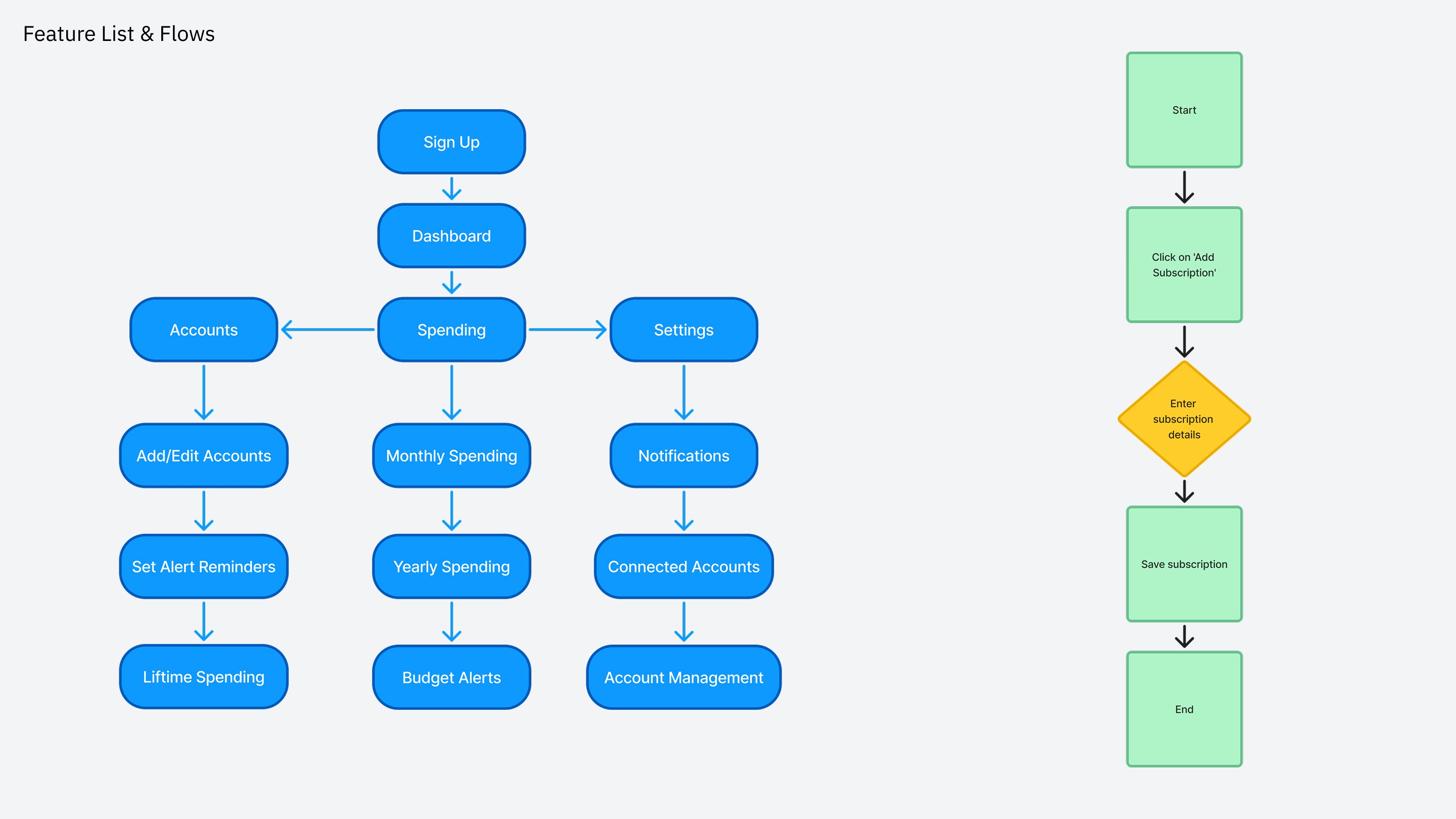
The goal was to give users a clear, centralized view of their recurring financial commitments. Success was defined by making subscriptions easy to discover, manage, and understand in terms of their long term impact, while maintaining a low friction and trustworthy experience that encouraged ongoing use.
Research Approach
I started with interviews people between the ages of 25 and 35 to understand how they track recurring expenses. Most relied on a combination of bank apps, spreadsheets, or mental tracking, which made subscriptions easy to forget and difficult to evaluate over time. Participants often described surprise charges and limited visibility into how recurring payments affected their overall financial health.
Home
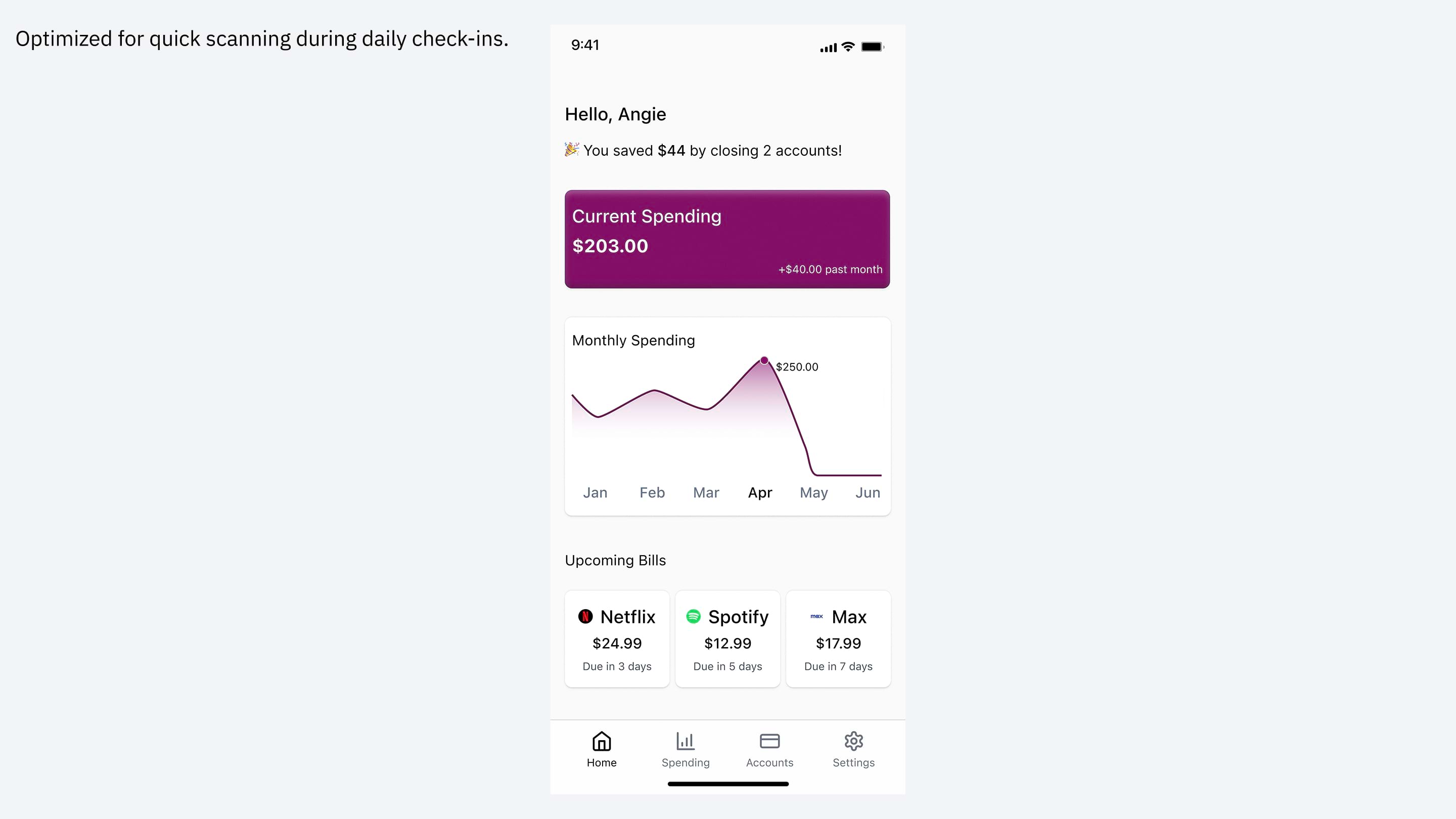
The home dashboard provides an immediate, high-level view of recurring spending without requiring deep exploration. Research showed users wanted quick visibility into current spend, upcoming bills, and the impact of recent actions. The layout prioritizes these signals while reinforcing positive behavior when subscriptions are canceled.
Adding an Account
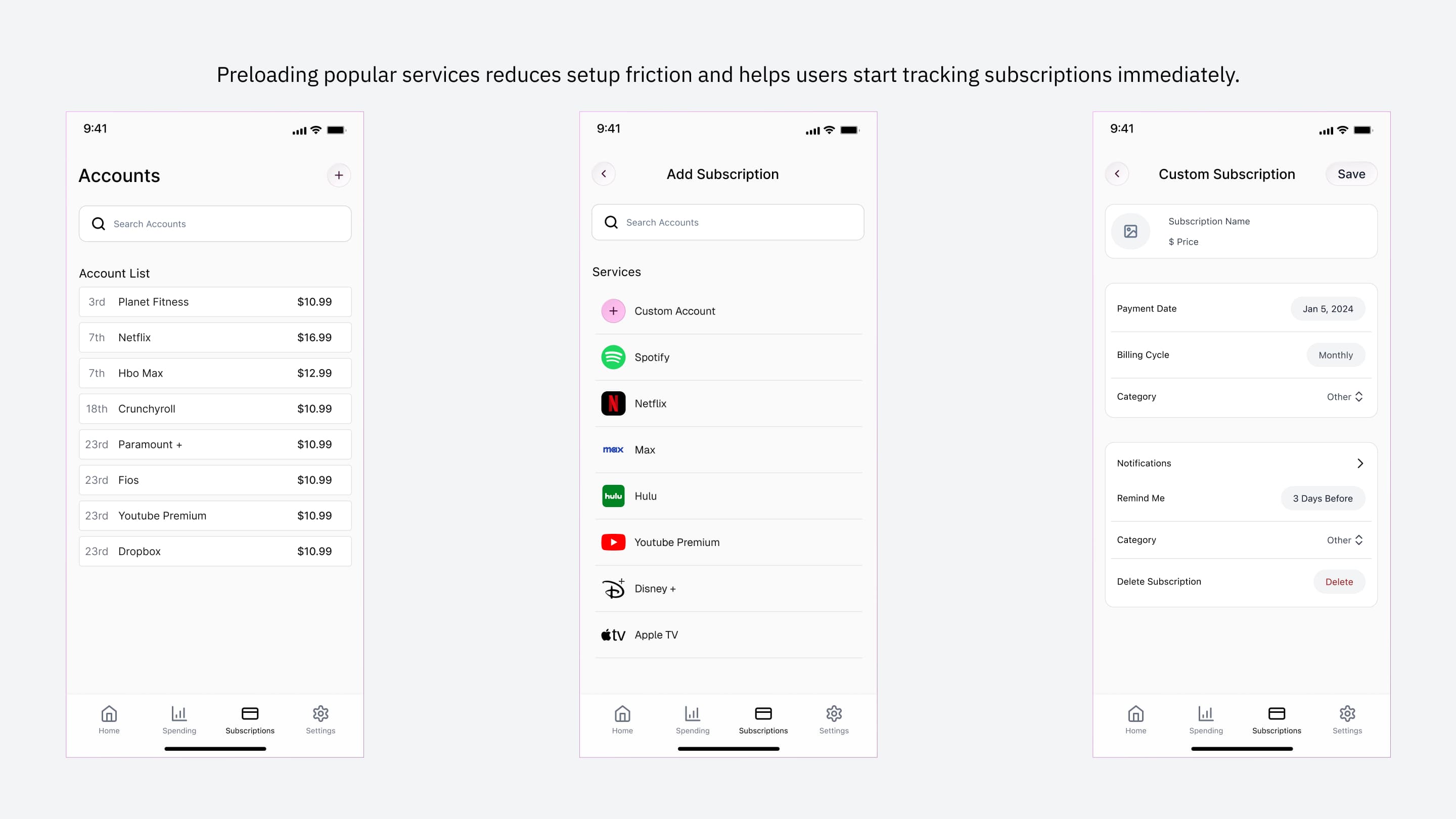
Adding a subscription was designed as a lightweight, low-friction flow that mirrors how users think about recurring payments. Research showed users wanted to capture only essential details up front, without being forced through a multi-step setup process. The flow prioritizes speed and clarity, allowing users to add accounts, define billing frequency, and set reminders in a single pass while maintaining flexibility to edit later.